According to the World Health Organization (WHO), 1 in 6 people worldwide will be aged 60 years or over by 2060. Population ageing is progressing in middle-income and low-income countries. The international definition of an ageing society is when 7% of the population is aged 65 and above. A country is considered an aged nation when 14% of the population is expected to be above 65 years of age. A super-aged society is when 20% of the population is above 65 years of age. The long-term decline in birth rates and improved health care may explain the shift in the age distribution of the population towards older ages.
In 2021, Malaysia became an ageing nation when the proportion of those aged 65 and above reached 7% of the total population. According to the Department of Statistics Malaysia (DOSM), individuals aged 65 and above are projected account for approximately 8% of the population in 2025. The department reported that 11.6% of Malaysians were aged 60 and above in 2024, equivalent to nearly 3.9 million people. By 2040, older adults could represent as much as 17% of the total population. This demographic transition brings both opportunities and challenges to policy in Malaysia, particularly in the areas of economy, health, welfare, and public services.
Malaysia is undergoing a rapid digital transformation. Government agencies are increasingly moving services online, expanding digital infrastructure, and integrating new technologies into public administration. This shift, commonly referred to as e-government, promises greater efficiency, accessibility, and improved service delivery to the public.
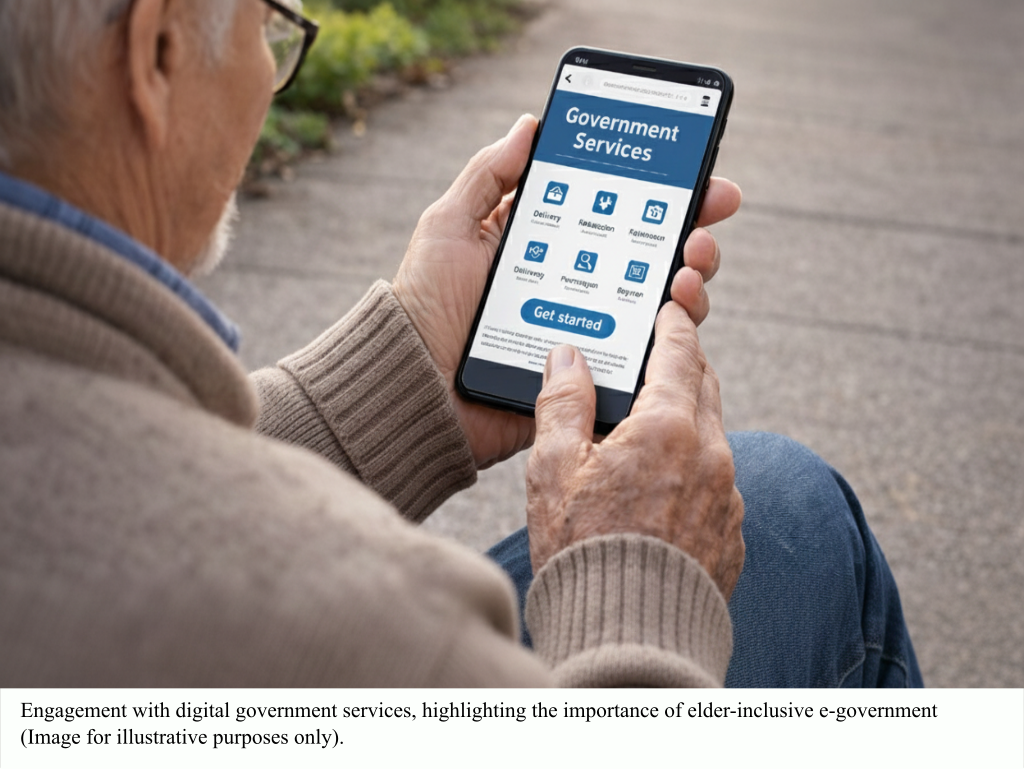
The elderly are likely to encounter more barriers to feeling connected to the world through information technology than younger people, which may lead to social isolation and depression. As many government services move online, the elderly must be digitally literate. However, given rapid technological advances, some experience digital exclusion. Ensuring that older people are not excluded from digital public services is both a policy imperative and a moral responsibility. Therefore, the government must develop strategies to address the risk of digital exclusion. As e-government becomes the primary gateway to public services, elder-inclusive design and support systems must be integrated into digital government planning. This is necessary to support the government’s aim to increase the number of working participants among the elderly in the 13th Malaysian Plan. Active participation of older workers is essential to ensure they are not sidelined in national development policies. Given the changing age demographic in Malaysia, older persons must be given access to ensure their voices are heard and their needs and concerns are met. In other words, they should not be neglected or perceived as a burden.
Digital transformation in Malaysia
The elderly possess a wealth of experience and skills. However, they are often neglected or perceived as a burden.
Malaysia has outlined an ambitious digitalisation roadmap under the MyDIGITAL Blueprint, launched in 2021. The initiative aims to transform the public sector into a digitally empowered ecosystem through:
- end-to-end online public services
- integrated platforms and secure digital identities
- improved digital infrastructure across urban and rural regions
- a more inclusive and people-centred digital economy
More recently, the government introduced the National Ageing Blueprint 2025–2045, which emphasises social protection, community support, long-term care, and improved access to public services for older persons. These initiatives demonstrate strong institutional commitment. However, the intersection between ageing and digital governance remains underdeveloped. While services are becoming digital-first, many older Malaysians face barriers that prevent them from fully utilising these new systems. Therefore, without targeted interventions, e-government risks becoming a driver of exclusion rather than empowerment for seniors.
Why elder-inclusive e-government matters?
1. It is their right
We may tolerate ageism and the increasing number of older people in our community. However, we fail to provide them with the right to make decisions regarding finances and public services. Often, the group’s access to public services such as pensions, welfare aid, health appointments, and identity documentation is perceived merely as a means for the state to provide social welfare. If the government aspires to offer its services digitally by 2030, older people must be given the right to be included in this aspiration. To achieve this, it is the government’s responsibility to ensure that older people are digitally literate. Digital literacy is not optional but essential to enable them to navigate online services and remain connected with society.
2. Enhancing independence and autonomy
As mentioned in the text, older people should not be perceived as a burden or neglected. Instead, as citizens living in a democratic society. government policies should create an age-friendly environmental framework. The voices of older people, whether individually or collectively through organisations for the aged, must be heard to promote their rights and protect them from discrimination. Digital systems enable older adults to complete tasks independently, reducing the need to rely on family members or make repeated trips to government offices. To enhance their independence and autonomy, the government must also consider the community as providers to the digital society. Older people should be given access to create platforms to offer services such as cooking, gardening, or teaching. This is important to support active ageing. As reiterated by the World Health Organization (WHO), active ageing “allows people to realise their potential for physical, social, and mental well-being throughout the life course and to participate in society according to their needs, desires, and capacities, while providing them with adequate protection, security, and care when they require assistance”.
3. Social isolation and depression
The COVID-19 pandemic highlighted the importance of online systems during emergencies. For older adults who are often the most vulnerable during crises, accessible digital services can be lifesaving and timesaving. Many seniors, particularly those with mobility challenges or living in rural areas, find physical travel difficult. Elder-friendly e-government reduces the burden of distance, transport costs, and physical strain. However, depression and anxiety resulting from loss of independence and grief are among the causes of mental health issues in older people. Abuse of older people by carers can also lead to mental health issues. Having digital competencies ranging from information searching to making a video call may promote social participation and enhance life satisfaction. The design of the platform must be part of the government’s digital public services with a focus on vulnerable groups such as older people. Yet, low digital competency may cause older people to withdraw from political activities. This is not surprising, as people in poor health often have fewer friends because they are unable to engage in many social activities.
Malaysia’s transition to e-government is a positive and necessary step in modern public administration. However, as the nation becomes an ageing society, digital transformation must be accompanied by deliberate, inclusive design and robust support systems. Ensuring that older Malaysians can access and benefit from digital public services is not merely a technical consideration; it is a matter of equity, dignity, and democratic participation. By embedding ‘elder-inclusive’ principles into policy, design, and community engagement, Malaysia can build a digital future that is not only innovative and efficient but also compassionate and just, especially for its ageing population.

Dr. Nazreena Mohammed Yasin
Senior Lecturer
Department of Social Sciences
Centre for General Studies and Co-Curricular
Universiti Tun Hussein Onn Malaysia

Dr. Rohana Abdul Hamid
Assistant Professor
Department of Political Science and Madani Studies
AbdulHamid AbuSulayman Kulliyyah of Islamic Revealed Knowledge and Human Sciences
International Islamic University Malaysia (IIUM)