by Ts. Dr. Salasiah Mohamad
PAGOH, – The Community Alliance for Restoration & Enhanced Sequestration (CARES) held at the Ethnobotany Garden, Tasik Laguna, Pagoh is the proof of Universiti Tun Hussein Onn Malaysia (UTHM) green initiative to support biodiversity restoration. This high-impact knowledge transfer and SULAM (Service Learning Malaysia-University for Society) programme was a strategic collaboration between Yayasan Sime Darby, Sime Darby Property Pagoh Sdn Bhd, Faculty of Applied Sciences and Technology (FAST), UTHM, and the Johor State Forestry Department.The event was graced by the presence of several distinguished guests, including Mr Hisam bin Hamzah, Head of Township at Sime Darby Property Pagoh Sdn Bhd, Dr Yasmin binti Rasyid, General Manager of Sustainability at Sime Darby Property and Ms Noratikah Mustafa, representing the North Johor District Forest Office, Johor State Forestry Department.
The primary aim of the initiative is to instil a profound sense of stewardship for environmental preservation among the youth through an interactive, science-led pedagogical approach.
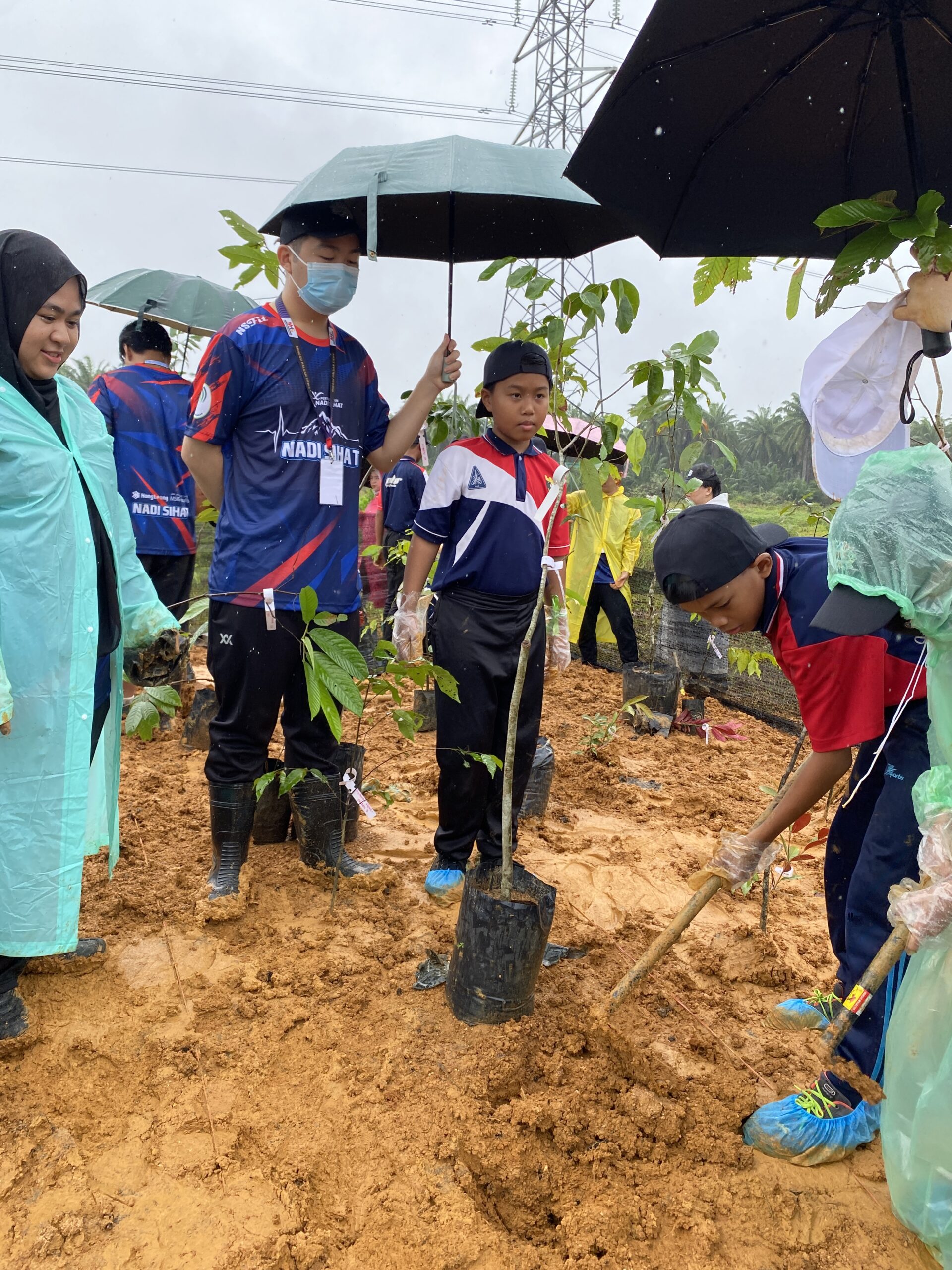
A cohort of 50 students and five accompanying teachers from Sekolah Kebangsaan Kota Raja, one of UTHM’s adopted school, took part in the programme to acquire practical skills in environmental conservation. They were mentored by 44 Bachelor’s Degree of Science (Biodiversity and Conservation) students who served as dedicated volunteers and facilitators.
The cornerstone of the programme is the application of the Miyawaki Rapid Afforestation technique. This methodology is engineered to expedite the development of urban forests by densely planting indigenous tree species, thereby enhancing local biodiversity significantly faster than conventional silviculture methods. Participants gained hands-on experience in the cultivation and identification of high-value native species, including Hopea odorata (Merawan), Dipterocarpus sp. (Keruing), and Antoshorea roxburgii (Meranti Temak Nipis).
Programme Advisor, Ts. Dr Salasiah binti Mohamad, noted that this initiative serves as a pilot project for the Biodiversity Badge accreditation. She expressed her aspiration that the programme would equip the community with proactive and scientifically rigorous carbon sequestration monitoring skills.
The long-term benefits of the CARES programme for the local community include the enhancement of the campus microclimate through increased shade and the restoration of natural habitats for local flora and fauna. This initiative further solidifies the university’s commitment to the national sustainability agenda through strategic industrial partnerships.
To commemorate their dedication, each participant was conferred with the Biodiversity Badge: Carbon Sequester Hero C.S.01, symbolising their contribution as protectors of the environment.
The programme was concluded with a plenary reflection session and luncheon, underscoring that synergy between academia, industry, community and government agencies.