A Malaysian secondary student might revise a Sejarah chapter from the official textbook, then watch a YouTube, chat with classmates on WhatsApp, and practise problem sets on Google Classroom.
As for foreign students—from Myanmar, Indonesia, or refugee communities—the routine looks different. Many rely on free online resources in their own language to keep up. A Rohingya teen might pair the Malaysian syllabus with Burmese YouTube tutorials; an Indonesian student might use apps in Bahasa Indonesia.
Not all teenagers use the internet carelessly. Many of these learners are creative, self-directed, and resourceful in how they use digital tools. Their learning does not always resemble the “nerd” stereotype once associated with Generation Y. Some of the most capable learners today are those who quietly manage their time, explore online tutorials, and build small communities of practice through messaging apps or study channels. They learn because they want to, not because someone tells them to — and that is confidence in action.
Confidence counts most
Malaysia’s classrooms are becoming more diverse as migrant families are settling in. A new Universiti Tun Hussein Onn Malaysia (UTHM) study found that helping teenage migrants believe in themselves is just as crucial as providing textbooks or Wi-Fi.
The research on Personal Learning Environments (PLEs) among migrant students enrolled in government schools between April 2023 and February 2024 shows that self-concept—a student’s belief in their own ability—explains almost half (49.5%) of the difference in how well migrant teens build and use their PLEs. Adding planning and management skills nudges the figure only slightly, to 51.9%, and including all other factors raises it to 53.4% (R² = 0.534). In short: confidence outweighs every other variable.
PLEs reveal more than technology habits—they show how language and identity shape learning. Migrant teens mix local content with familiar-language resources to make sense of lessons, requiring both initiative and resilience.
Why teens need extra help
Teenagers are still discovering who they are. Erikson’s theory of socio-emotional development describes adolescence as the stage of identity formation. Without strong self-belief, even useful resources may not help them reach their potential.
Adult migrant learners, such as those in vocational or language courses, usually came with clear goals and life experience—they already know how to plan, manage tasks and build networks.
Johor’s Department of Education has rolled out inclusive programmes such as Program Pendidikan Inklusif and Pendidikan Khas Integrasi to bring children from diverse backgrounds into mainstream schools, but UTHM study shows that access alone is not enough.
UTHM researchers urge teachers to focus on three essentials: self-belief, solid study habits and a sense of belonging. Teachers can strengthen students’ confidence by celebrating small wins and giving feedback that shows how effort leads to improvement.
Technology helps migrant students access materials and people they wish to connect with—but they must first connect with themselves. The experience of understanding “what I can do when I am on my own” reflects personal, day-to-day decision-making.
Practical study skills—such as planning homework, setting goals, and taking breaks from stressful tasks—determine whether study materials become meaningful learning experiences or merely another burden to complete for the teacher’s approval.
Malaysia’s lesson for ASEAN
Across Southeast Asia—from Thailand to Singapore—schools face similar migration waves. Malaysia’s experience shows that simply giving migrant teens a seat in class is only the beginning. What keeps them learning is confidence and good study habits.
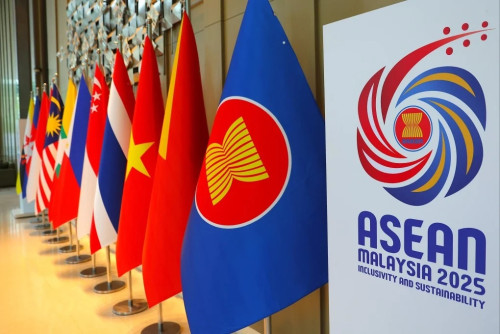
This insight gained special attention at the 47th ASEAN Summit and Related Meetings, held in Kuala Lumpur from 26–28 October 2025, with Malaysia serving as ASEAN Chair under the theme “Inclusivity and Sustainability.” The summit reaffirmed ASEAN’s shared goal of promoting Education for All through cross-border cooperation, digital access, and teacher capacity-building.
Malaysia’s commitment—guided by the Madani philosophy—was praised for combining compassion (ihsan), balance (wasatiyyah), and dignity (maruah insan) in regional education diplomacy. Kuala Lumpur’s leadership placed education equity at the centre of ASEAN’s post-2025 vision, ensuring that migrant and displaced learners are not left behind.
Madani diplomacy and Anwar vision
Under Prime Minister Dato’ Seri Anwar Ibrahim, Malaysia’s Madani framework has reframed education as both a moral duty and a diplomatic bridge. It promotes values-driven learning—anchored in justice, trust, and empathy—while embracing technology and lifelong learning.
Anwar’s commitment to equitable education and global dialogue has earned him recognition among the World’s 500 Most Influential Muslims, where he is consistently ranked in the Top 10 for his intellectual leadership and vision of unity through knowledge.
His Madani diplomacy positions Malaysia as a nation that champions education for all, not as charity but as justice. In his words “knowledge must liberate the soul, not merely serve the system.”
UTHM joins UNESCO’s global network
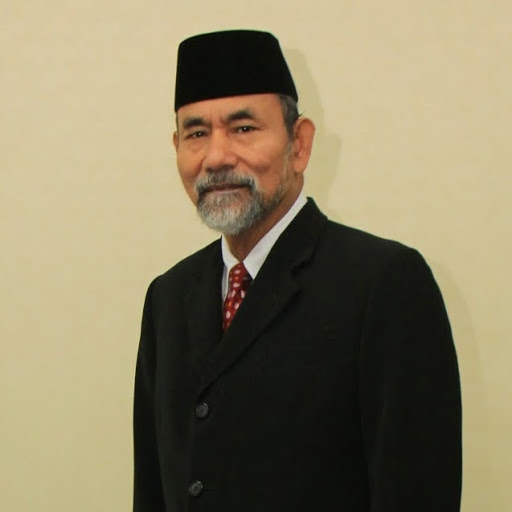
This focus on self-belief aligns with a new recognition for the university itself. UTHM has been awarded the UNESCO Chair on TVET Educator Competence and Transversal Skills for Professional Development (2025–2029), This focus on self-belief fits with a new recognition for the university itself. UTHM’s Emeritus Professor Dr. Jailani Md Yunos is currently appointed as the Chairholder, bringing extensive expertise and experience in TVET to lead these significant projects and foster international collaboration including research partnerships, community empowerment programmes, and academic exchanges.
The four-year initiative supports UNESCO’s 2022–2029 strategy and the United Nations Sustainable Development Goals, linking UTHM’s work with migrant learners to a broader push for sustainable and equitable education worldwide.
From ASEAN to the world
From WhatsApp chats to AI-powered apps, students everywhere are quietly designing their own PLEs. The challenge is ensuring these environments empower all learners—not just the privileged or native-born.
If Malaysia can rise to this challenge, it offers a model for ASEAN: proof that diverse classrooms can thrive when technology meets trust, and when learning is guided by confidence, compassion, and the Madani spirit.
“Our mission is to connect knowledge with humanity. By empowering teachers and learners to build confidence, competence, and compassion, Malaysia’s contribution through this UNESCO Chair will echo far beyond our borders—from ASEAN to the world,” said Emeritus Professor Dr. Jailani Md Yunos.
Malaysia’s journey proves that the heart of education diplomacy lies in self-belief. When confidence and inclusivity take root, technology and policy become powerful tools for progress. Guided by the Madani vision and strengthened through ASEAN cooperation, Malaysia is reimagining classrooms that connect learners not only through digital means but through shared understanding and purpose.
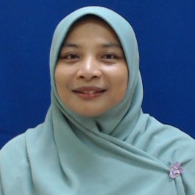
Dr. Norkhairolizah Hamzah
Senior Lecturer
Faculty of Technical and Vocational Education
Universiti Tun Hussein Onn Malaysia (UTHM)