
On the morning of 24 August 2025, just days before Malaysia’s 68th Merdeka Day, residents of Segamat in Johor were awakened by a sudden tremor. At 6:15?a.m., a magnitude 4.1 earthquake struck roughly 5?km west of the town, reaching a relatively shallow depth of 10?km- a depth typically indicative of crustal movements rather than volcanic or deep-seated activity.
A preliminary geological assessment by the Department of Minerals and Geoscience Malaysia (JMG) located the epicentre near an extension of the Mersing Fault Zone, a known left-lateral strike-slip fault trending west-northwest to east-southeast. The presence of hydrothermal features in the region reinforces the theory that weakening of the crust in these zones facilitated stress buildup and release, not volcanic processes.
Confirming this, seismological data released following a 3.2-magnitude tremor on 27 August: Categorised by MetMalaysia as an aftershock, and the movement was mapped as left-lateral on the Mersing Fault. The northern block appeared to have shifted westward, while the southern counterpart moved eastward, consistent with classic strike-slip behaviour.
Experts caution that the quake may not be an isolated incident. Professor Dr. Azlan Adnan of UTM warned that further seismic activity, potentially exceeding magnitude 5, cannot be ruled out. In general, seismic activity occurs in a three-stage sequence, namely foreshocks, main shocks and aftershocks, as exemplified by a past series of 13 tremors between magnitudes 2.5 and 3.5 that shook the Bukit Tinggi region from late 2007 into early 2008.
Although Peninsular Malaysia rests on the relatively stable Sunda Plate, it is not entirely immune to intraplate tremors. Stress transferred from regional tectonic activity, particularly from subduction along the western edge of the Sunda Plate, can reactivate aged fault lines like Mersing.
Such reactivation is indeed not unique to Malaysia. In 2023, a 6.8-magnitude intraplate quake in southern Morocco claimed nearly 3,000 lives and devastated tens of thousands of homes. Similarly, New Zealand’s 2011 Christchurch quake, also an intraplate event, led to 185 fatalities and ranked among the country’s worst disasters. These events highlight the importance of incorporating so-called “stable” fault lines in seismic hazard assessments.
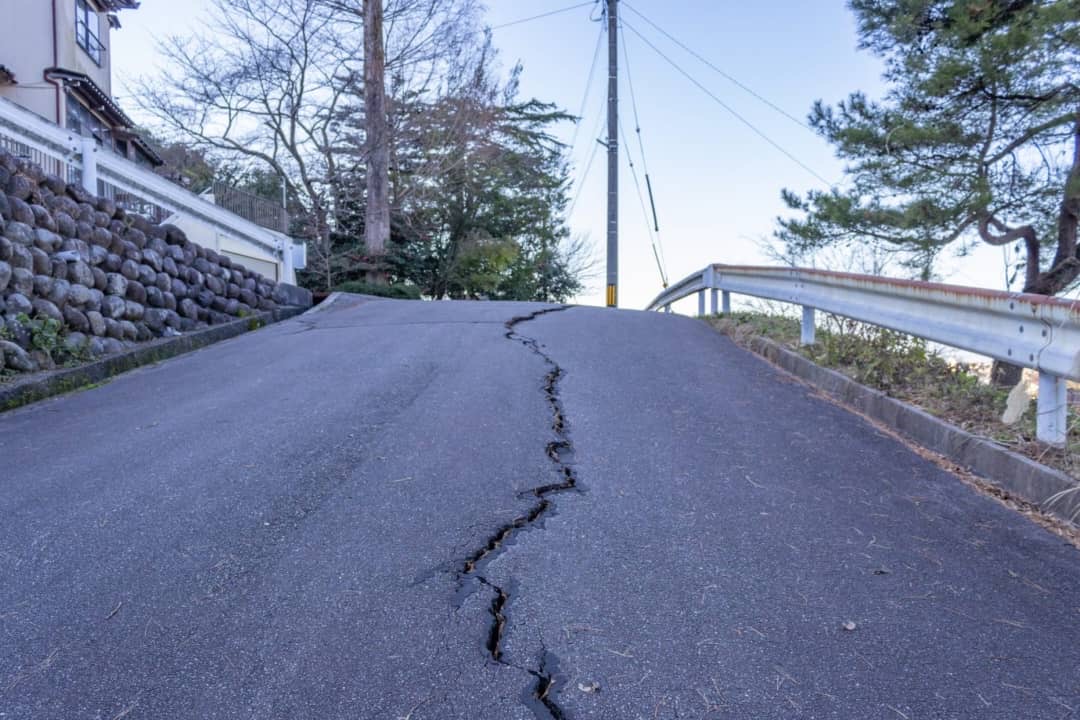
Within Malaysia, the quake has prompted swift government action. The Public Works Department (JKR) declared a 24-hour alert to inspect public infrastructure. Early assessments revealed minor damage, including cracks in walls at Segamat Community College 1 & 2, the Gemereh Police Quarters, Segamat Hospital and a slight ceiling collapse at the District Kadi Office. Thankfully, no casualties have been reported.
MetMalaysia warns that aftershocks may continue, potentially for days or weeks, as the fault line seeks equilibrium. A series of tremors followed the main event, including magnitudes of 2.5, 3.4, and 2.7, suggesting persistent crustal adjustment along the Mersing Fault Zone.
Despite this intense local activity, global data paint an overall steady picture. According to EM-DAT, the first half of 2024 saw around 60 earthquakes of magnitude 6 or greater, which was consistent with long-term averages. This is indicative that that, globally, the frequency of large quakes remains within expected levels.
Still, the role of climate change in seismicity remains limited. While glacial rebound, with land rising after being compressed by former ice sheets, can induce minor seismic event. It is not a major driver, especially in tropical regions like Southeast Asia. Most significant quakes arise from tectonic plate interactions, such as those along converging boundaries.
In Southeast Asia, the impact of plate convergence was tragically demonstrated in March 2025 when Myanmar was struck by a catastrophic 7.7?magnitude quake along the Sagaing Fault, triggered by the relentless pressure among the Indian, Eurasian, Sunda and Burma plates. The quake claimed over 3,000 lives, sending tremors across Southeast Asia and highlighting the destructive power of large tectonic events.
It is important to note that cities like Bangkok, built on the soft sediments of the Chao Phraya Delta, face a heightened risk due to site amplification. These soft soils can intensify seismic shaking by absorbing and amplifying waves. When seismic waves align with a building’s natural resonance frequency, the resulting vibrations can significantly amplify, greatly increasing the risk of structural damage, particularly in tall buildings.
Back in Segamat, the sight of structural cracks and citizen concern has prompted officials to advise the public to seek information only from verified government channels like the MyCuaca app, MetMalaysia’s website and official social media platforms. MetMalaysia continues to monitor seismic activity and keeps the public informed.
In summary, the 24 August tremor in Segamat offers a sharp reminder that Malaysia’s geological stability is not absolute. Faults like the Mersing Fault remain active and capable of generating seismic events, however rare. As regional stresses shift and faults under strain reawaken, robust monitoring and inclusive seismic planning remain essential, even in tectonically calm places like Malaysia.

Prof. Ir. Dr. Chan Chee Ming
Faculty of Engineering Technology
Principal Researcher
Research Centre for Soft Soils (RECESS)
Universiti Tun Hussein Onn Malaysia