As Malaysia targets cleaner rivers and stricter environmental compliance by 2030, landfill leachate has emerged as a critical geo-environmental challenge with direct implications for geotechnical engineering and ground protection. While the Natural Resources and Environmental Sustainability Ministry (NRES) aims to improve river cleanliness, reduce leachate pollution and raise effluent compliance, leachate generation from high-moisture municipal waste and inadequate landfill engineering continues to threaten soil stability, groundwater quality and subsurface infrastructure.
A geo-environmental challenge below ground
Landfill leachate is often framed primarily as a chemical or regulatory issue, when it is fundamentally a geo-environmental and geotechnical engineering problem. Truth is, how leachate forms, migrates and ultimately threatens groundwater, soil stability as well as infrastructure depends less on policy intent than on subsurface behaviour governed by soil mechanics, hydraulic processes and long-term material performance.
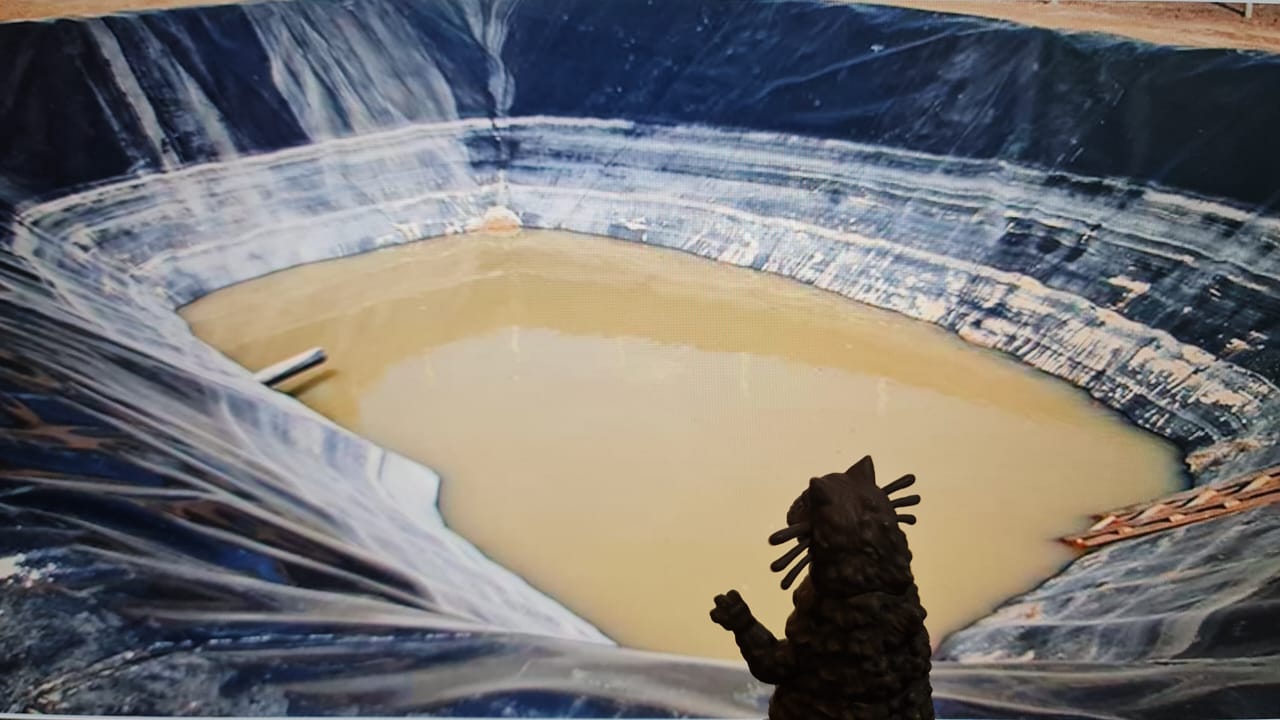
Leachate poses a geo-environmental risk not only through chemical contamination but also by altering soil behaviour beneath and around landfill facilities. Elevated moisture content increases soil permeability and pore water pressures, accelerating leachate migration through natural strata and engineered barriers. Where liner systems are inadequately designed, poorly maintained or compromised over time, leachate infiltration can lead to progressive degradation of clay liners, geomembrane failure and loss of containment.
Leachate flow paths and geotechnical consequences
These processes heighten the risk of differential settlement and soil subsidence, undermining landfill stability and posing long-term threats to groundwater systems, adjacent infrastructure and downstream ecosystems, issues that place geotechnical engineering at the centre of effective landfill leachate protection and sustainable waste management.
At its source, leachate generation is driven by the high moisture content of municipal solid waste, which can reach up to 50% by weight and rises further during wet and festive periods. This moisture increases pore water pressures within the waste mass, creating downward and lateral hydraulic gradients. From a schematic standpoint, the process can be visualised as follows:
Rainfall infiltration enters the waste body → pore pressures build → leachate seeks the path of least resistance → migration occurs through waste layers, liner defects or foundation soils.
Without effective drainage and containment, leachate does not remain static, i.e. it propagates and carries with it potentially toxic compounds. Soil permeability plays a decisive role in this propagation. In sandy or silty foundation soils, even small breaches in containment systems can allow rapid vertical seepage, while in clayey soils, prolonged exposure to leachate can alter soil fabric and chemistry. Laboratory and field studies have shown that chemically aggressive leachate may increase the hydraulic conductivity of compacted clay over time, undermining its function as a barrier. This is not an instantaneous failure, but a gradual degradation process, one that is easily overlooked if landfill performance is assessed only in the short term.
Liner failure mechanisms and leachate pathways
Engineered liner systems are intended to interrupt this flow path, typically using compacted clay liners, geomembranes or composite systems. However, liner failure is rarely a single-event phenomenon. From a geotechnical perspective, failure zones tend to develop where stresses, deformation, and material weaknesses intersect. Uneven waste loading induces differential settlement; settlement generates tensile strains; tensile strains initiate cracking in clay liners or stress cracking in geomembranes. Once cracks or punctures form, they become preferential flow channels, allowing leachate to bypass containment layers and migrate into underlying soils. This failure mechanism can be schematically described as:
Waste loading → differential settlement → liner deformation → localised cracking or puncture → concentrated leachate flow → subsurface contamination plume.
It is important to note that leachate migration is often anisotropic, following bedding planes, fractures or more permeable strata laterally before moving vertically. This explains why contamination is sometimes detected far from the landfill footprint, confounding expectations based solely on surface boundaries.
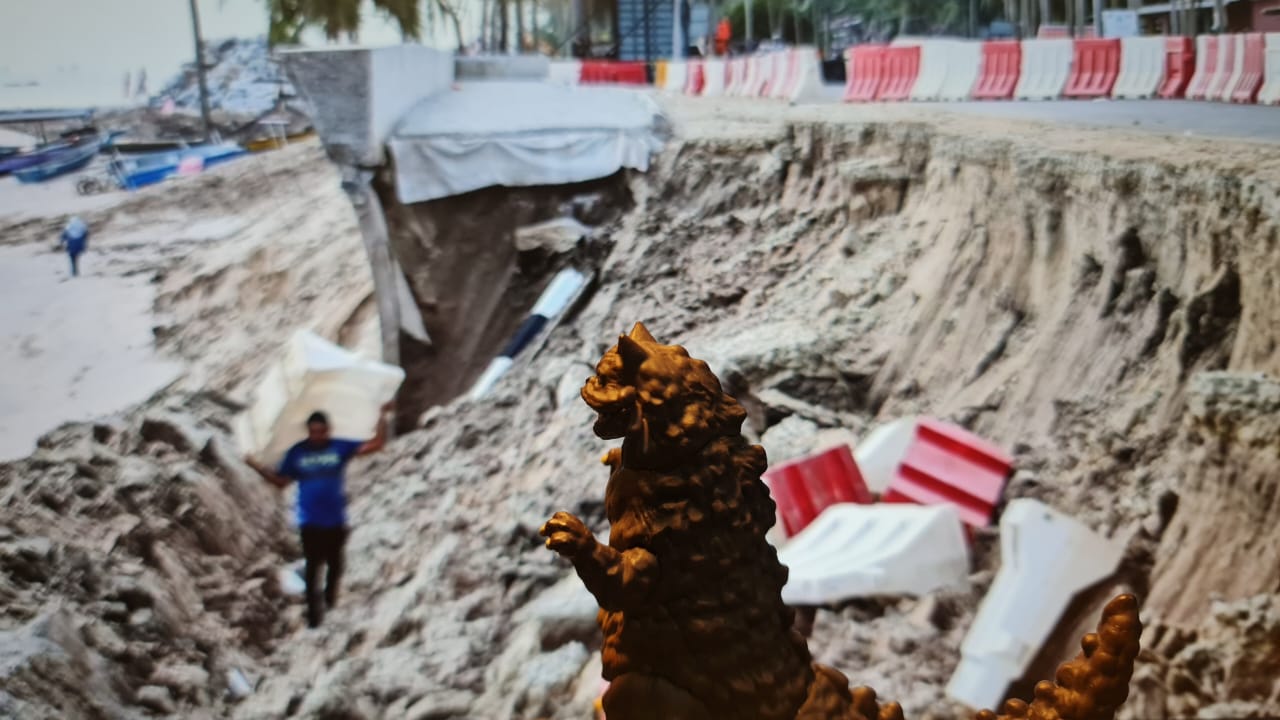
Beyond contamination, leachate accumulation has direct implications for ground stability. Elevated pore water pressures reduce effective stress in both waste and foundation soils, lowering shear strength and increasing the risk of slope instability. Over time, uneven consolidation may lead to differential settlement and surface subsidence, particularly in older or poorly engineered landfill sites. These geotechnical consequences affect not only environmental safety but also post-closure land use, infrastructure integrity, and long-term maintenance costs.
Engineering knowledge shapes policy
Effective landfill leachate protection relies on geotechnical competence, yet engineering education often treats it as a fragmented niche. Graduates may understand regulations but lack insight into failure mechanisms, flow paths and soil–structure interaction. Integrated geo-education, covering contaminant transport, hydro-mechanical coupling and performance-based design with case studies and monitoring, is essential to equip engineers for design, oversight and adaptive management, providing the technical foundation needed to guide effective policies and regulatory frameworks.
Only after these technical foundations are firmly established should policy enter the discussion. Regulatory standards for liner systems, monitoring requirements and competency certification must be informed by geotechnical evidence and long-term performance behaviour. Appointing qualified personnel is not merely an administrative requirement; it is a technical safeguard against progressive failure. Policies that overlook subsurface mechanics risk becoming reactive rather than preventive.
Above all that, protecting soil and groundwater from landfill leachate is not just a matter of rules, it requires sound geotechnical understanding. Only by treating leachate as a subsurface engineering challenge can policies be applied effectively; without this shift, even well-intentioned targets for cleaner rivers and safer land may rest on unstable ground.

Prof. Ir. Dr. Chan Chee Ming
Faculty of Engineering Technology
Principal Researcher
Research Centre for Soft Soils (RECESS)
Universiti Tun Hussein Onn Malaysia