Language learning is often associated with textbooks, examinations, and classroom drills. However, educators are increasingly recognising that meaningful language acquisition also depends on cultural understanding. This approach was evident during a recent Chinese Tea Ceremony organised for Mandarin language students, where hands-on experience played a vital role in learning.
The tea ceremony, conducted as part of a Mandarin language programme at Universiti Tun Hussein Onn Malaysia (UTHM), offered students an opportunity to experience Chinese culture through observation, participation, and reflection. For many non-Chinese students, particularly beginners, the session marked their first close encounter with traditional Chinese cultural practices.
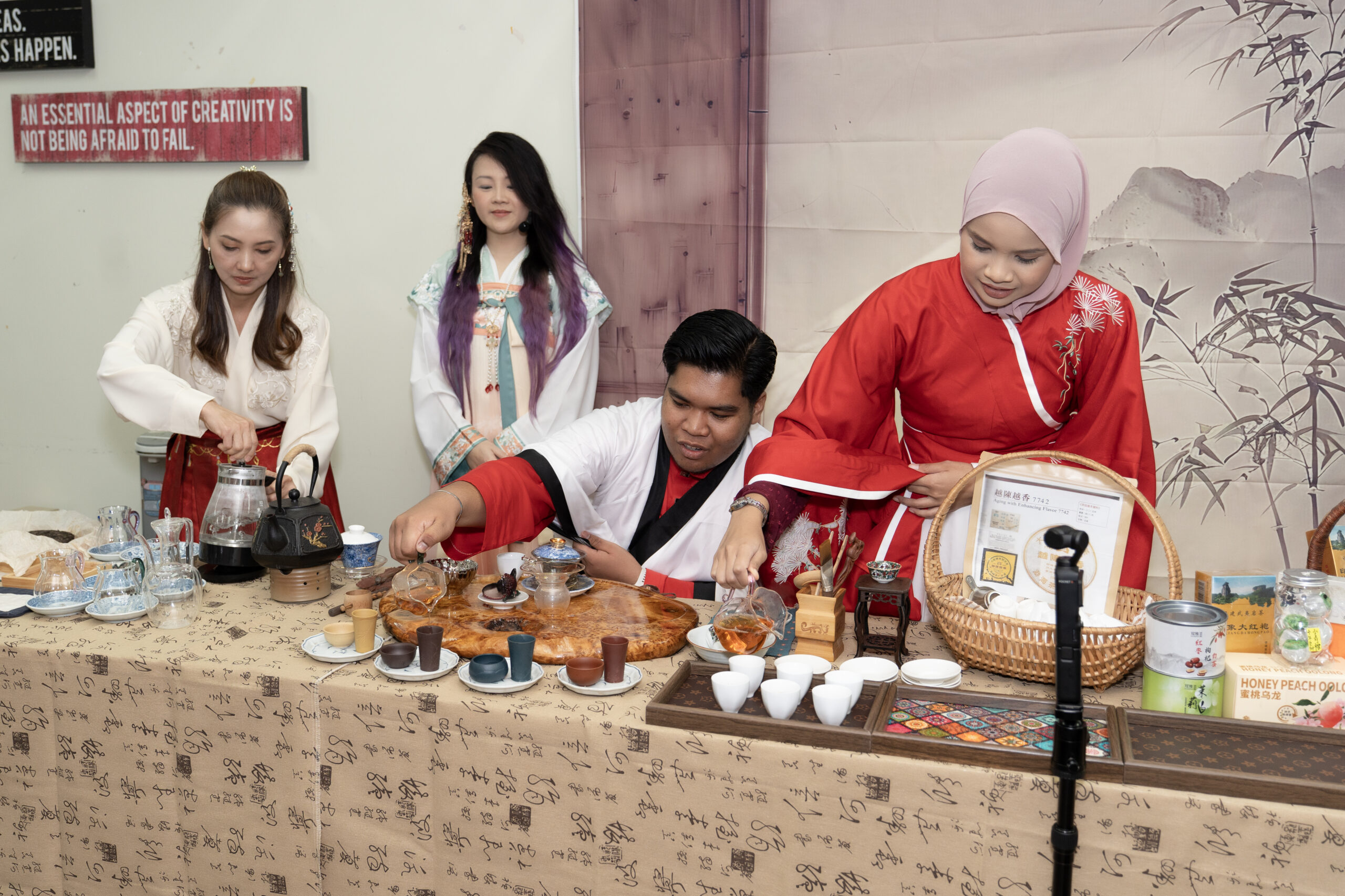
Instead of learning about culture through written descriptions or lecture slides, students observed the careful preparation of tea, from arranging tea utensils to controlling water temperature and serving tea with deliberate, respectful gestures. The calm atmosphere of the ceremony encouraged students to slow down and pay attention to details, reinforcing the idea that cultural understanding often begins with observation rather than speech.
In Mandarin language classes, students are commonly introduced to concepts such as respect, politeness and harmony. While these ideas are frequently discussed, they can remain abstract without real-life examples. During the tea ceremony, students witnessed how these values are expressed through behaviour. The use of both hands when serving tea, the quiet movements and the emphasis on attentiveness illustrated how cultural norms shape social interaction.
Student engagement was further enhanced through hands-on participation. Rather than remaining passive observers, students assisted in preparing the tea space, handling tea utensils and supporting the serving process. This practical involvement allowed students to learn by doing, which was particularly beneficial for beginners with limited Mandarin proficiency. Students’ understanding was built through action and observation, reducing the pressure to speak accurately.
The activity demonstrated that understanding cultural behaviour is an important part of effective communication, even when language skills are still developing. Feedback from students showed that the experience has helped boost their confidence. They also shared that the tea ceremony made Mandarin learning feel less intimidating, as communication extended beyond spoken language.
In addition, the tea ceremony also prompted reflection. Students were encouraged to compare the experience with their daily habits of drinking coffee or tea and noted the contrast in atmosphere. While daily beverage consumption is often rushed, the tea ceremony emphasised slowness, mindfulness and respect. This comparison helped students appreciate the deeper cultural meaning behind the practice, rather than viewing it merely as a traditional cultural practice.
From an educational perspective, the activity highlights the value of experiential learning in language education. By combining cultural practice with language learning, students can connect theoretical knowledge with real-life application. Such experiences support outcome-based learning by encouraging students to demonstrate understanding through participation, observation and reflection.
The programme also reflects broader educational goals in Malaysia’s multicultural context. As students prepare to engage with diverse communities locally and globally, intercultural competence has become an essential skill. Activities such as Chinese Tea Ceremony help students develop cultural sensitivity, awareness of non-verbal communication and respect for different social practices.
Most importantly, the tea ceremony demonstrated that meaningful learning does not require advanced language proficiency but the immersion to the culture give them more experience to the language that they learned. Even students at a beginner level were able to engage, reflect and learn through guided participation. This inclusive approach ensures that all learners, regardless of language ability, can benefit from cultural exposure.
Overall, the Chinese Tea Ceremony served as a reminder that language education extends beyond grammar and vocabulary. Through hands-on experience, students gained insight into the cultural values that underpin communication in Chinese society. Such initiatives enrich Mandarin learning by making it more engaging, relevant and memorable, while fostering intercultural understanding that is increasingly important in today’s education landscape.

Yeoh Li Cheng
Language Teacher
Centre for Language Studies
Universiti Tun Hussein Onn Malaysia (UTHM)