The Energy Transition and Water Transformation Minister Datuk Seri Fadillah Yusof in his opening speech at the Tropical Crops Carbon Credit Forum 2025 on November 24th, emphasised that sustainability is not optional, but a moral duty in the fight against climate-driven desertification. As Malaysia faces rising droughts and creeping land degradation, turning tropical crops into living carbon sinks presents a promising pathway to restore soils and combat desertification.
Deserfication in tropical Malaysia?
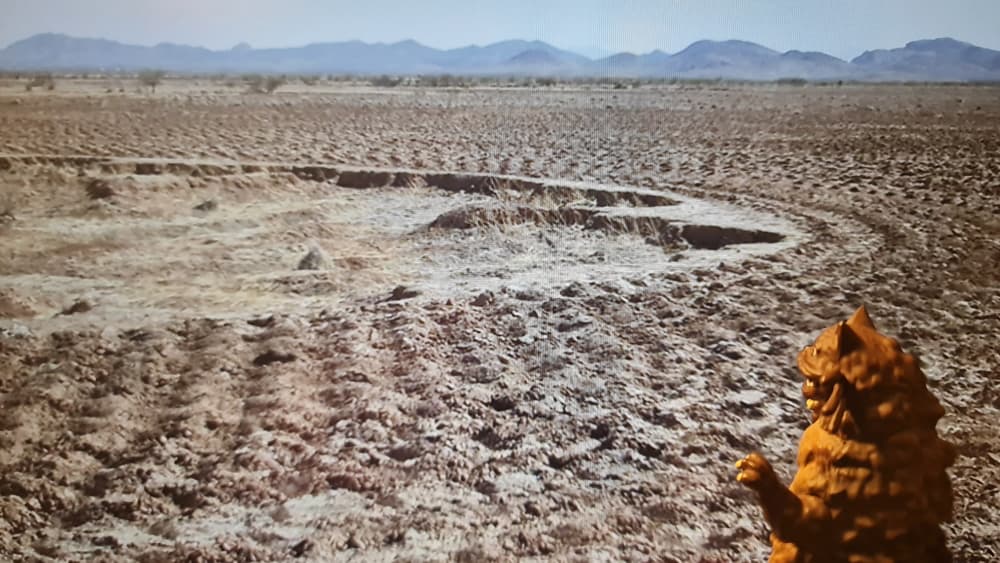
When you picture desertification, you likely envision vast, arid landscapes, camels and endless sand dunes. This dramatic image rarely aligns with Malaysia’s reality, i.e. a nation blessed with abundant rainfall and lush tropical rainforests. Yet, in 2025, environmental experts and governmental bodies across Malaysia are sounding a quiet but urgent alarm: The processes that lead to desertification are evidently active here.
They manifest not as encroaching sand, but as severe land degradation, critical water shortages during prolonged droughts, and topsoil loss that turns fertile ground barren. The battle against this subtle erosion of our natural capital is a crucial domain for the quiet heroes of our built environment, namely the civil and, specifically, geotechnical engineers. This essay explores how these engineering disciplines are foundational to preventing a future where Malaysian land can no longer sustain us.
How quickly are we going to?
The current situation in 2025 highlights the growing belief that desertification and drought are becoming real threats, even within Malaysia’s humid climate. The primary drivers are not climate alone but rapid land-use changes, particularly massive deforestation for agricultural expansion, such as commodity crop cultivation of oil palm plantations. This has inadvertently altered the fundamental nature of the land in a negative way.
The fight begins directly beneath our feet, which is the specific purview of geotechnical engineering. This field is fundamentally concerned with the mechanics of soil and rock. In a healthy tropical ecosystem, soil is a living sponge, rich in organic matter that allows it to absorb massive amounts of water, resist erosion and support dense vegetation. Deforestation destroys this delicate structure. The result is laterization, where the soil turns hard, compacts and loses its ability to retain moisture, mirroring the properties of a dry, barren landscape.
Geotechnical engineering: To the rescue!
Here is where geotechnical expertise becomes vital. Geotechnical engineers conduct critical site investigations and soil analyses that inform sustainable land management practices. They analyze soil shear strength, a crucial factor for ensuring slope stability in areas made vulnerable by heavy rainfall on denuded hillsides. In degraded areas prone to flash flooding, they design bioengineering solutions, such as blending specific vegetation with engineered structures like reinforced earth walls or specialized subsurface drainage systems, to anchor the earth. The goal is to manage water flow effectively, preventing surface runoff from stripping away nutrient-rich topsoil, which is the very essence of what turns vibrant land into unproductive ground. These efforts directly contribute to the national goal of achieving land degradation neutrality, a target Malaysia is tracking as part of its third Voluntary National Review (VNR) on Sustainable Development Goals (SDGs).
The greater civil engineering works
Moving beyond the soil itself, the broader discipline of civil engineering provides the essential infrastructure to manage the environmental pressures that exacerbate land degradation. Civil engineers manage water resources, perhaps the most critical element in a drought-prone Malaysia. The country has already experienced severe drought conditions, notably in areas like Langkawi and states such as Kelantan and Selangor, leading to significant water supply disruptions. These events are intensified by cyclical El Niño phenomena, which bring prolonged droughts, and by existing infrastructure challenges, such as inadequate drainage and poorly maintained embankments.
Civil engineers design and maintain the dams, reservoirs and complex water treatment and distribution networks that ensure supply during these intense dry periods. Furthermore, they are integral to designing resilient urban and agricultural landscapes. Smart irrigation systems are introduced to optimize water usage in agriculture, reducing strain on natural sources. In our cities, ‘green infrastructure’ principles are applied, such as rain gardens and bioswales that capture and filter stormwater, green roofs that reduce runoff and heat, and urban forest planning that recharges local water tables; together helping to counteract the effects of a drying environment.
At one with the world against deserfication
These engineering solutions are strongly supported by top-down government and UN initiatives that define Malaysia’s proactive stance in 2025. Malaysia is actively involved in the United Nations Convention to Combat Malaysia actively addresses desertification, in line with the UN Convention to Combat Desertification (UNCCD), using AI-driven models to forecast risk areas. The country’s commitment is anchored in its SDG Roadmap Phase II (2021–2025), which prioritizes the protection and restoration of terrestrial ecosystems, with a focus on sustainable management of agro-ecosystems and forest landscapes to safeguard vital ecosystem services.
In parallel, Malaysia is implementing coordinated strategies to achieve “low-risk country” status under the European Union Deforestation Regulation (EUDR) 2025, ensuring legal and sustainable sourcing of key commodities. These policy frameworks empower civil and geotechnical engineers to apply resilient, sustainable practices across the nation, linking environmental stewardship with infrastructure and land-use planning.
Drying out is not an option!
Malaysia may not resemble a desert, but the creeping threat of land degradation and water scarcity is real, and worse, rapidly escalating. From the soil’s microstructure to sprawling urban landscapes, civil and geotechnical engineers are frantically working on the frontlines, applying science, technology and nature-based solutions to stabilize soils, manage water and restore ecosystems. Coupled with proactive policies, AI-driven risk assessment and community engagement, these efforts transform what could be a slow march toward desertification into a roadmap for resilience.

Prof. Ir. Dr. Chan Chee Ming
Faculty of Engineering Technology
Principal Researcher
Research Centre for Soft Soils (RECESS)
Universiti Tun Hussein Onn Malaysia