

The quiet of Iskandar Puteri (Johor Baru) construction site shattered one night in early September this year, when a concrete transporter machine, the kind of steel giant meant to build, became the very cause of destruction. A 34-year-old Bangladeshi worker was found pinned beneath the machine, and despite rescue teams racing 18 kilometers to the site and using specialised tools, he was pronounced dead: A stark reminder of how quickly machinery lapses can turn fatal.
Where barriers fall, machines take lives
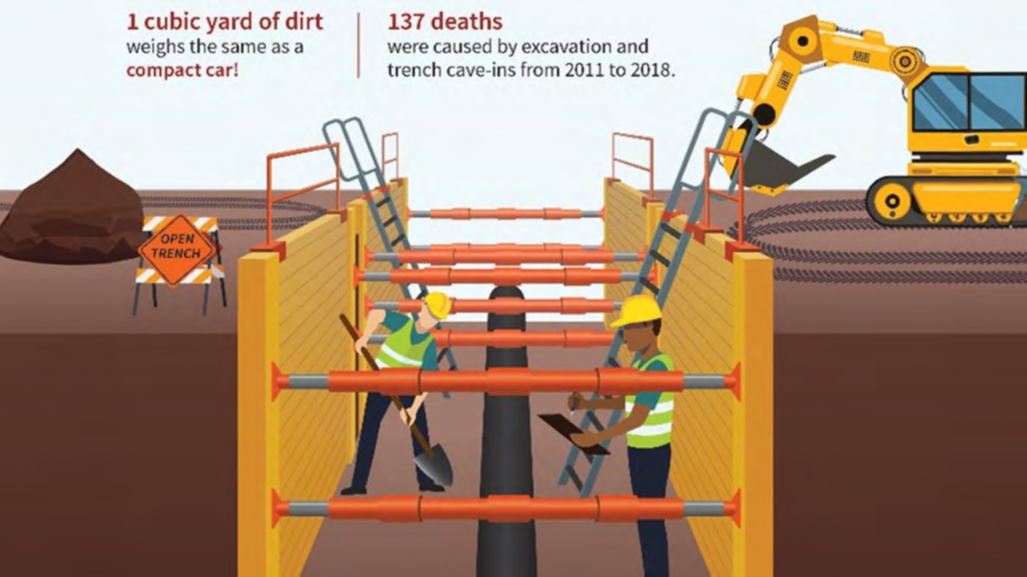
Preventing such tragedies requires strict control over three key hazards: (1) People falling into excavations, (2) work equipment entering the excavation unintentionally, and (3) excavated spoil collapsing back into the trench. Achieving this requires strong physical barriers, controlled site access and careful traffic management around excavation zones. It also demands planning to keep machinery operations, stockpiles and spoil heaps well clear of excavation edges. When these precautions are overlooked, especially near heavy equipment, the risk of machinery entering the excavation or striking workers rises sharply, creating exactly the kind of fatal scenario seen in this case.
Caution: Drop zone!
Excavation edges must be cleared of loose rocks, soil or any materials that could slide, roll or fall onto workers, helping to prevent injuries. Wherever there is a risk of falling more than 3 meters, open edges should be protected with sturdy barricades, guardrails, intermediate rails and toe boards, along with clearly visible warning signs in prominent spots. Even when the fall risk is less than 3 meters, the same precautions should be taken if there are other hazards, such as standing water, uneven or slippery ground, and protruding reinforcement bars. Besides, safe access into and out of excavations deeper than 1.2 m is essential, using ladders, stairways or ramps that are easy for workers to reach. If crossing trenches is necessary, dedicated access paths at least 60 cm wide with proper edge protection should be provided, ensuring workers can move safely without taking unnecessary risks. By rigorously applying these precautions, every worker can enter and move around excavation sites with confidence, knowing that preventable accidents are being actively controlled.
When machines meet the edge
Machinery must never be operated in a way that could endanger the operator or anyone near the excavation. Workers must not remain inside a trench when plant or machinery is depositing materials into it. Measures must also be in place to prevent traffic or construction vehicles from striking the excavation, its workers or passing pedestrians. This includes proper barricading, traffic diversion, warning signs and, when necessary, active traffic control by appointed personnel. Work carried out near public roads requires approval from the relevant authority, with proper temporary signage, lighting and traffic management. All vehicles on site must be roadworthy, properly registered and operated only by licensed drivers. Because operators of heavy equipment often have large blind spots, the movement of excavators, loaders and transport vehicles must be strictly controlled to prevent workers from entering danger zones.
Safe stockpiles and ground stability
Material stockpiles and excavated spoil must be placed safely away from the excavation edge, i.e. at least 60 centimeters or a distance equal to the trench depth, so they cannot fall back into the trench or overload the surrounding ground. The exact distance depends on soil type, trench depth and slope though. Note that placing spoil on the lower side of a slope can reduce the risk of collapse, while care must be taken not to obstruct natural drainage or cause water to pool near the excavation. Where excavations extend below the groundwater level, the risk of sudden flooding, drowning or entrapment in silt must be controlled. Side supports must be designed to resist groundwater pressure and dewatering systems, such as sump pumps, well points, deep wells or grouting, should be installed. These systems must also prevent pollution and ensure that nearby ground or structures remain stable.
Always safeguarding the workers
Public walkways, sidewalks and roads bordering excavations must be securely fenced, with temporary footpaths safely constructed and protected on both sides. During night work, the area must be well illuminated with lighting that avoids glare and harsh shadows, and lamps should be suitably guarded. Warning lights or flares must guide pedestrians and vehicles. In addition, a designated watchman or flagman should control truck movements entering and exiting the site. On the other hand, workers may face health hazards such as leptospirosis, hepatitis A, tetanus or infections from soil contaminated with asbestos, tar residues, heavy metals or other toxic substances. These risks must be assessed during site investigation and addressed in the client’s pre-tender safety plan and the contractor’s construction phase plan. Noise and vibration hazards from pneumatic breakers must also be anticipated, with alternatives considered and regulations followed.
Secure sites, safety for all
Strict planning, vigilant barriers, careful machinery operation, controlled traffic and proactive health and safety measures are essential to prevent accidents, protect workers, and ensure that excavation sites are still safe for everyone involved, including both personnel and the public.

Prof. Ir. Dr. Chan Chee Ming
Faculty of Engineering Technology
Principal Researcher
Research Centre for Soft Soils (RECESS)
Universiti Tun Hussein Onn Malaysia