
“A drop in the ocean” may be what many of us say when we see the new water tariff rates. It suggests something too small to make a difference, insignificant in the larger scheme of things. And yet, the recent adjustments to water pricing across Malaysia are anything but insignificant; they matter a lot and should be taken seriously. As an English lecturer and a domestic water user, I believe this moment calls not only for action, but for reflection.
Water is life, a familiar phrase, repeated often but deeply appreciated rarely. The reality is that clean, usable water does not magically flow out of our taps. It is extracted, treated, filtered, transported, stored, and monitored with significant technological, financial, and human effort. These processes require investment and infrastructure, both of which are costly to maintain. As a nation that has long enjoyed some of the lowest water tariffs in the region, Malaysia is now facing the necessary truth: sustainability has a price.
Still, change begins with awareness, and this awareness must be cultivated through education, communication, and conscious living. In my classroom, I teach students about metaphors, idioms, and meanings beyond the literal. I find that the language we use to describe water, such as “flooded with bills”, “come hell or high water”, “dry spell”, or “a drop in the bucket”, provides not just linguistic creativity but meaningful opportunities for discussions on conservation, equity, and accountability.
These expressions reflect how deeply embedded water is in our everyday language. They also present an opportunity to foster environmental literacy in a space often seen as unrelated: the language classroom. As educators, we are not confined to textbooks or rigid syllabi. We are facilitators of critical thinking and responsible citizenship. When teaching persuasive essays, letter writing, or public speaking, I include real-world issues like the recent water tariff hike as a prompt. This not only makes the lesson look relevant but also helps promote awareness about looking after our environment and using water responsibly.
In future lessons, I plan to integrate water-saving awareness into my technical communication lessons. One way is by assigning proposal writing tasks that focus on real-life issues such as campus water usage or community conservation practices. For example, students might be asked to draft a proposal for improving water efficiency in student hostels or to outline a small-scale campaign promoting mindful water habits. Through these writing tasks, students will not only practise the core elements of technical writing but also engage with topics that matter. In doing so, I hope to demonstrate that language skills are not just academic exercises, but tools that can contribute meaningfully to environmental awareness and action.
In my household, the journey towards mindful water use began with simple changes. We started with five-minute showers, collecting rainwater for our potted plants, and using a bucket instead of a hose to wash the car. We also fixed leaky taps and became more conscious about dishwashing routines. These may sound minor or even trivial. Nonetheless, collectively, such habits can make a difference. As the saying goes, “many drops make an ocean.”
To those who argue that the tariff increase is unfair or burdensome, I offer this: water is not free because its treatment and delivery are not free. What we have enjoyed for years, perhaps taken for granted, is a subsidised convenience. Paying a little more, especially for higher usage beyond basic needs, is not a punishment. It is a contribution to the long-term viability of a system we all rely on. It is, in fact, an investment in water security.
For industries and non-domestic users, the stakes are even higher. Commercial consumption often far outweighs household usage, and so too must the responsibility. I would gently remind that with great usage comes great responsibility. Sustainability cannot be achieved if only the rakyat are asked to bear the burden. Industries that consume large amounts of water lead by example, adopting water-efficient systems and supporting public education campaigns.
As an academic, I believe we can do more than talk. Universities should be modelling sustainability through policy and practice. Language lecturers have an important yet often overlooked role. We are storytellers, meaning makers and idea builders. We can help shape public discourse not only by teaching students how to write and speak well, but also by guiding them towards what is worth writing and speaking about.
Let us also be honest: awareness alone is not enough. It must lead to behavioural change. We must teach, model, and live by the values we want to see. We need to move beyond slogans and social media posts towards measurable action in our classrooms, homes, institutions, and communities.
In the end, this is not just about litres or cent per cubic metre. It is about what we value and how we demonstrate that value. If our awareness remains merely “a drop in the ocean,” we may never stay afloat when real crises arise.
Let us not wait for the taps to run dry before we act. Let us not wait for a crisis to remind us that water is precious. Instead, let us speak it, teach it, and most importantly, live it now.
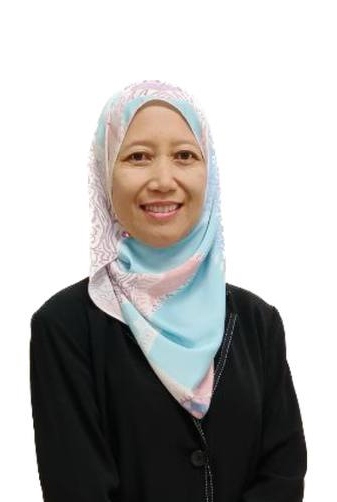
Assoc. Prof. Dr. Sazuliana Sanif,
Deputy Dean (Academic & Students)
Centre for Language Studies
Universiti Tun Hussein Onn Malaysia

Irfahani Haziqah Mhd Kasman
Currently an Intern Student at the Centre for Language Studies, UTHM
From Faculty of Social Sciences and Humanities,
Universiti Kebangsaan Malaysia